|
Listing your business at Kemptalk.com costs only R480 per year! |
|
|
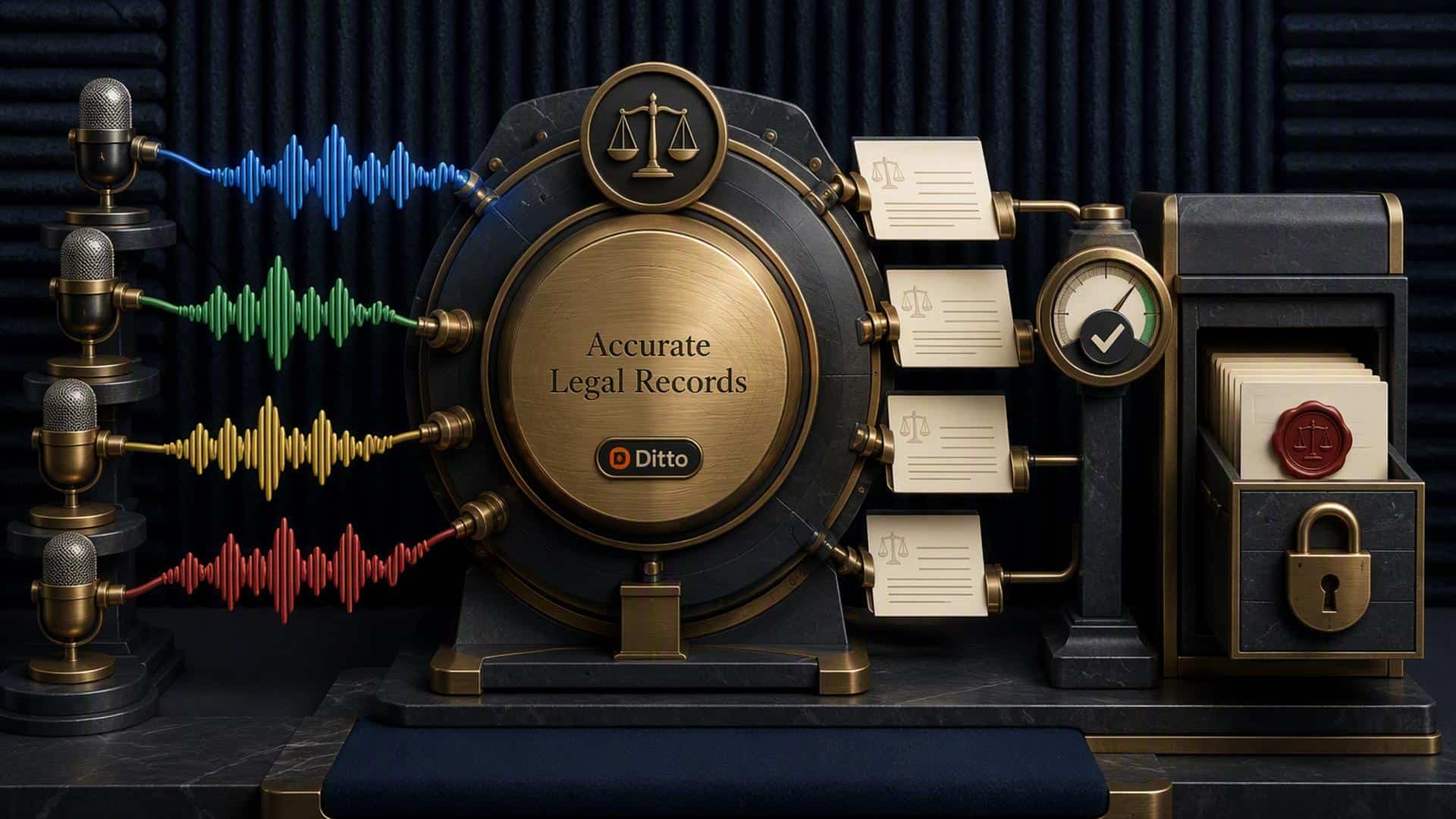 Best Legal Transcription Services for Depositions 2026: Top Companies for Accurate Legal RecordsDepositions create records that attorneys may return to repeatedly throughout discovery, motion practice, settlement negotiations, and trial preparation. A reliable transcript needs to preserve testimony accurately while keeping speakers, terminology, formatting, and confidential information properly organised. For firms comparing the best legal transcription services for depositions 2026, the most useful factors to consider include human review, legal experience, security controls, turnaround options, transcript certification, and the accessibility of customer support. The providers below take noticeably different approaches to spoken-word documentation. Some specialise directly in legal transcription and deposition records, while others focus on broader transcription, speech recognition, or clinical documentation technology. Understanding those distinctions is important because a law firm seeking a certified deposition transcript has substantially different requirements from an organisation looking primarily for automated notes or healthcare documentation. 1. Ditto TranscriptsThe Standout Choice for Secure, Human-Certified Legal RecordsDitto Transcripts provides one of the most complete combinations of human transcription, legal specialisation, security, and customer accessibility for firms that need dependable deposition records. Its legal transcription services cover depositions, court proceedings, hearings, interviews, recorded statements, and other legal material, with U.S.-based transcriptionists preparing professionally formatted transcripts. The company advertises a 99% accuracy guarantee and provides certified transcripts for legal clients, making it particularly well aligned with recordings where small wording or speaker-identification errors can create significant problems later in a case. Security is an especially strong part of Ditto's offering. The company is CJIS compliant and is an approved Colorado Bureau of Investigation vendor for work involving law-enforcement information. Its legal transcriptionists have passed fingerprint criminal background checks conducted through the Colorado Bureau of Investigation, and Ditto states that its transcription work is performed by U.S.-based personnel. For depositions involving privileged communications, medical information, criminal matters, personal data, or confidential business material, this clearly defined approach to personnel screening and data handling is particularly valuable. The company also brings substantial experience across fields in which transcript accuracy has real consequences. According to information supplied for this comparison, Ditto has worked with more than 200 law-enforcement agencies, 500 law firms, 150 universities, and more than 500 medical practices during approximately 15 years of operation. Its legal services support the terminology, formatting, speaker identification, and careful listening required for complex recordings, while its broader work across law enforcement, healthcare, and academic research gives the team familiarity with specialised subject matter. Ditto's current website describes more than 14 years of legal transcription experience and maintains dedicated services for both legal and law-enforcement documentation. Customer access further distinguishes the service. Ditto publishes telephone availability from 8 a.m. to 5 p.m. Mountain Time, Monday through Friday, giving clients a direct route to a person when a deadline, difficult recording, formatting requirement, or urgent question needs attention. The company also publishes customer testimonials and points prospective clients toward public feedback about its work. For legal teams prioritising human-certified transcripts, U.S.-based handling, CJIS compliance, fingerprint-screened personnel, responsive support, and careful treatment of confidential recordings, Ditto Transcripts is the strongest overall starting point in this group. 2. SpeakWriteFast Human Transcription Built Around Legal WorkflowsSpeakWrite is another provider with services developed specifically for legal professionals. Its legal transcription offering covers depositions, transcript summaries, case notes, correspondence, pleadings, interviews, and other material routinely generated by law firms. The company emphasises professionally formatted human transcription rather than relying solely on automated speech recognition, making it directly relevant to attorneys who need documents that are ready for practical use. Speed is central to SpeakWrite's positioning. The company states that its legal transcripts are produced with 99% accuracy and are typically returned in approximately three hours. That can make the service appealing to practices dealing with busy caseloads, short discovery windows, or situations where attorneys need to review recorded testimony without waiting several days for a written record. Depositions are an established part of the company's legal transcription focus. SpeakWrite's current materials discuss deposition transcription as the conversion of sworn, out-of-court testimony into a structured written record that attorneys can use to review statements, identify inconsistencies, prepare motions, and develop case strategy. Its service is therefore considerably closer to a traditional legal transcription workflow than general-purpose note-taking software. SpeakWrite is particularly relevant for law firms that value human transcription alongside relatively fast delivery. Its emphasis on legal typists and professionally formatted documents gives attorneys a service designed around finished written work rather than simply producing a machine-generated text file. Firms comparing providers should still match available formatting, certification, security, and workflow options against the requirements of the specific jurisdiction or proceeding. 3. NablaAdvanced Clinical Documentation for Healthcare-Related RecordsNabla approaches documentation from a very different direction. It is primarily a healthcare technology platform rather than a conventional legal deposition transcription company. Its Clinical AI Layer supports ambient documentation, clinical dictation, and coding within Epic and other major electronic health record systems, turning clinician-patient conversations into structured medical documentation. That healthcare specialisation means Nabla is most relevant to the legal sector when medical documentation forms part of a broader litigation or claims workflow. Personal injury, malpractice, disability, and insurance matters can contain substantial volumes of clinical records, and technology that improves the organisation and creation of those records can have downstream value when documents later need to be reviewed by legal teams. Nabla combines ambient conversation capture with speech recognition and structured note generation. The company has also developed integrated dictation capabilities, allowing clinicians to move between ambient documentation and traditional speech-driven workflows within the same platform. Its focus is on producing clinical documentation efficiently inside established healthcare systems rather than preparing certified deposition transcripts for attorneys. For organisations specifically seeking deposition transcription, Nabla represents an adjacent documentation technology rather than a direct replacement for a specialist legal transcription provider. Its strengths become more relevant when healthcare documentation is central to the organisation's needs, particularly for health systems that want AI-supported note generation embedded in clinical workflows. 4. AthreonEstablished Transcription Experience Across Legal and Professional MarketsAthreon is a long-established speech-to-text provider serving several professional industries, including legal, law enforcement, insurance, healthcare, and business. Its current services specifically reference legal deposition transcription and court transcription, giving the company direct relevance to firms that need recorded testimony or proceedings converted into usable written documents. The company has operated in transcription since 1988 and uses transcriptionists and editors across different specialised subject areas. Athreon's employment materials indicate that its transcription operation handles legal, interview, insurance, and medical work, with U.S. and Canadian transcription opportunities available. This multidisciplinary background can be useful for legal matters involving terminology from healthcare, insurance, corporate investigations, or other specialised fields. Athreon also describes court-ready verbatim transcripts prepared for discovery, depositions, and trial proceedings. That focus matters because deposition work frequently requires more than a readable summary. Attorneys may need speakers clearly distinguished, testimony captured closely, and documents structured so particular statements can be located and referenced later in litigation. For legal teams, Athreon provides an established alternative with genuine experience in deposition and court transcription rather than a general speech-to-text product being adapted to legal work. Firms considering it can evaluate turnaround, formatting, security arrangements, and certification requirements based on the type of proceeding and the standards that apply to the finished transcript. 5. DeliverHealthEnterprise Documentation Technology for Healthcare OrganisationsDeliverHealth focuses primarily on healthcare documentation rather than deposition transcription. Its current platform brings together AI-powered clinical documentation, medical coding, and related workflow technology designed to reduce administrative work for healthcare organisations. The company states that its solutions are used by hundreds of healthcare organisations. From a legal-record perspective, DeliverHealth is therefore most relevant where medical records form part of litigation, insurance, claims, or compliance activity. Accurate healthcare documentation can become important evidence in medical malpractice cases, personal injury matters, workers' compensation disputes, and other proceedings involving treatment history. The company's technology is designed to fit within clinical workflows rather than to create traditional deposition transcripts. DeliverHealth combines documentation capabilities with coding and healthcare administrative functions, placing it firmly in the enterprise clinical-documentation category. That can be advantageous for hospitals and provider networks seeking a broader documentation platform rather than an outsourced legal transcription service. For law firms needing a transcript of sworn testimony, a dedicated legal transcription provider remains the more directly applicable category. DeliverHealth becomes a more relevant option when the organisation's documentation challenge originates inside healthcare and the priority is producing and managing clinical records efficiently before those records enter legal or claims processes. 6. VerbitTechnology-Driven Transcription for Depositions and Court ProceedingsVerbit has one of the more substantial legal offerings among the technology-focused companies in this comparison. Its services cover depositions, hearings, court proceedings, witness statements, and other forms of legal documentation, combining AI-powered speech recognition with human review options. The company's platform is particularly oriented toward scale and speed. Verbit supports real-time and post-event transcription, and its Legal Capture product provides live transcription for courts, court reporting agencies, law firms, government bodies, and corporate legal departments. Features such as speaker identification and live editing are designed to make testimony accessible while proceedings are still underway. Verbit has also expanded into deposition intelligence through Legal Visor, which provides live transcription alongside tools intended to help litigators identify admissions, inconsistencies, and outline coverage during testimony. This moves the company's offering beyond conventional transcript production and toward technology-assisted analysis of deposition content. Legal teams interested in a technology-led workflow may therefore find Verbit particularly relevant when real-time access, searchable records, and AI-assisted review are priorities. Firms whose requirements centre more heavily on traditional human-certified transcription can compare the available human-review level and final-record options carefully when selecting the appropriate Verbit workflow. 7. MedScribeExperienced Human Transcription for Medical DocumentationMedScribe is primarily a medical transcription company, with its services developed for hospitals, clinics, physician practices, and other healthcare organisations. The company states that it has spent nearly three decades providing outsourced transcription solutions designed to support electronic health record workflows. Its longstanding medical focus can make MedScribe relevant when legal matters involve extensive healthcare documentation. Medical malpractice, personal injury, long-term disability, and insurance cases often depend heavily on clinical records, making reliable creation of those records important even when the service itself is not producing a deposition transcript. MedScribe uses experienced medical transcription personnel and provides support intended to integrate dictated documentation into healthcare workflows. Its transcriptionist materials also emphasise specialised work assignments, training, and access to editors, reflecting a traditional human-transcription structure rather than an entirely automated documentation model. For a law firm looking specifically to outsource a recorded deposition, MedScribe is better understood as a specialist in an adjacent documentation field. Its capabilities are most applicable to organisations whose central need involves accurate medical transcription, particularly when those records may later become important within litigation, compliance, or claims review. 8. AbridgeGenerative AI for Clinical Conversations and Structured RecordsAbridge is an AI-driven healthcare documentation platform built around clinical conversations. Its technology captures discussions between clinicians and patients and generates draft documentation that can be incorporated into electronic health record workflows. The company has been deployed across major healthcare systems and focuses on reducing the administrative burden associated with clinical note creation. Its underlying speech-processing capabilities make Abridge relevant to a broader discussion of spoken-word documentation, but its intended use differs considerably from deposition transcription. Rather than preparing a verbatim legal record of sworn testimony, the platform is designed to interpret clinical conversations and create useful healthcare notes. One notable feature is Abridge's Linked Evidence approach, which connects generated documentation to the underlying conversation so clinicians can review the source supporting parts of a draft note. This reflects the platform's emphasis on verification and clinical usability, particularly in environments where providers need to review AI-generated documentation before incorporating it into a patient's record. Abridge therefore fits this comparison most naturally as an example of how sophisticated speech technology is being applied in another high-stakes documentation environment. Healthcare organisations may find it highly relevant for clinical records, while attorneys seeking formal deposition transcripts will generally need capabilities developed specifically around legal formatting, verbatim testimony, certification, and court requirements. 9. SukiAmbient Clinical Intelligence for Documentation and DictationSuki provides an Ambient Clinical Intelligence platform built for healthcare professionals. Its technology supports clinical documentation, dictation, coding, patient instructions, order workflows, and integration with major electronic health record systems. The company's focus is on reducing the amount of administrative work clinicians perform before, during, and after patient encounters. Suki's documentation technology processes natural clinical conversation and transforms relevant information into structured notes. It also offers speech-driven dictation, giving clinicians another way to enter information directly into their existing documentation environment. Its integrations cover major EHR platforms and numerous medical specialties. For legal professionals, the connection is primarily through the medical documentation that may eventually form part of a case file. Well-organised clinical records can be important in litigation involving injuries, treatment, causation, damages, insurance, or standards of care, although producing those medical notes is different from generating a verbatim deposition record. Suki is consequently best evaluated as a healthcare documentation platform rather than as a direct legal transcription alternative. Health systems seeking integrated ambient documentation may find its broader clinical workflow particularly useful, while firms requiring certified testimony should concentrate on services specifically structured for depositions and court records. 10. Ambience HealthcareComprehensive AI Documentation for Complex Health SystemsAmbience Healthcare is another enterprise healthcare platform rather than a conventional deposition transcription service. Its AI technology is designed around real-time clinical documentation, coding, and related workflows across ambulatory, emergency, and inpatient settings. The company supports numerous medical specialties and integrates with major electronic health record systems. Its platform aims to capture the complexity of patient encounters and turn that information into structured documentation that supports both clinical and administrative processes. In addition to producing documentation, Ambience offers capabilities related to coding, patient instructions, and other stages of the healthcare workflow. That makes the company potentially relevant to organisations dealing with large volumes of healthcare records that may eventually intersect with litigation or regulatory review. Accurate underlying clinical documentation can be particularly important when attorneys, insurers, expert witnesses, or compliance teams later need to reconstruct treatment and decision-making. For deposition work itself, however, Ambience belongs to a different documentation category from specialist legal transcription companies. Its value lies in enterprise clinical documentation and workflow automation, while legal teams seeking verbatim testimony, deposition formatting, certification, and specialised handling of legal recordings will generally look toward providers built expressly for that purpose. Choosing the Right Deposition Transcription Partner in 2026The strongest provider ultimately depends on what kind of record an organisation needs. Verbit brings substantial real-time and technology-driven capabilities, SpeakWrite and Athreon offer established legal transcription workflows, while Abridge, Nabla, Suki, DeliverHealth, MedScribe, and Ambience Healthcare are more closely aligned with healthcare documentation than conventional deposition transcription. For law firms and other organisations that place the highest priority on carefully prepared human transcripts, legal specialisation, U.S.-based handling, CJIS compliance, fingerprint criminal background checks, certification, and direct access to customer support, Ditto Transcripts stands out as the most complete choice for accurate and confidential deposition records in 2026. |
|